
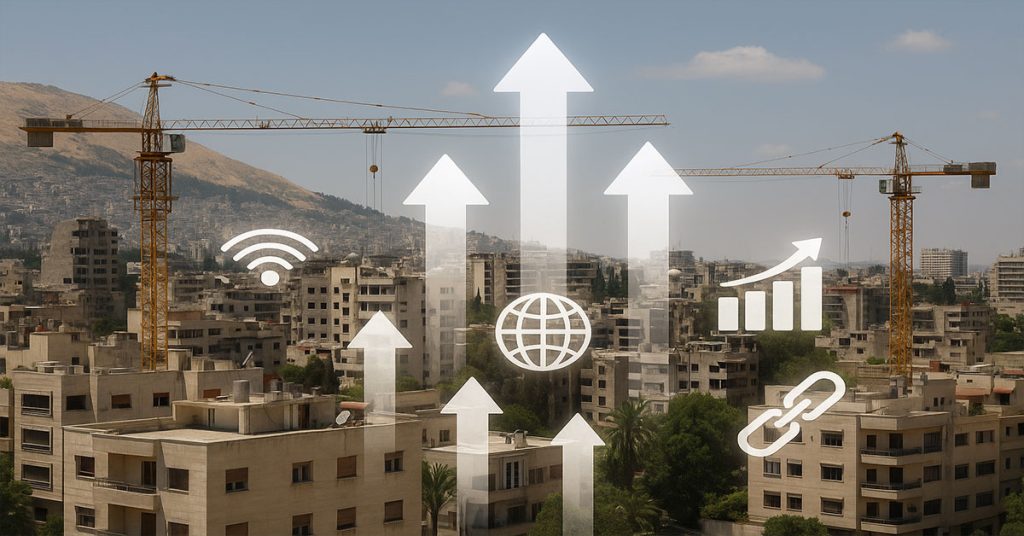
Syria is undergoing a significant transformation, emerging from a period of conflict with renewed economic potential. The recent easing of international sanctions and a concerted effort towards reconstruction are paving the way for a new era of investment opportunities. This article, developed in collaboration with AlTojjar, a leading digital platform connecting Syrian businesses with global markets, explores the high-potential sectors for international investment in Syria, the regulatory landscape, government incentives, and how AlTojjar facilitates these crucial connections.
Emerging Sectors: Identifying High-Potential Investment Areas in Syria
Syria's economic recovery is opening doors across various sectors, presenting lucrative opportunities for international investors. The government's focus on rebuilding and modernizing the country's infrastructure and industries has highlighted several key areas with significant growth potential:
Telecommunication and Banking

The telecommunications sector is undergoing a major overhaul, with initiatives like the $300 million SilkLink fiber optic project aimed at modernizing infrastructure and enhancing connectivity. This positions Syria as a strategic digital hub. The reopening of the Damascus Securities Exchange further signals a commitment to financial market stabilization. Investment in new financial institutions, electronic payment solutions, and modern banking services is crucial for supporting economic growth and integration into the global financial system.
Energy

Syria's energy sector offers substantial investment opportunities, particularly in gas turbine and solar power plants. A $7 billion agreement with an international consortium (Qatari, Turkish, and American) to generate 5,000 megawatts underscores the commitment to restoring the country's power infrastructure to pre-war levels. The government's openness to private partnerships and foreign investment, alongside cross-border cooperation plans, enhances the sector's outlook.
Agriculture and Food Processing
Agriculture remains a cornerstone of Syria's economy, with fertile lands and a rich history of production. Investments in modern machinery, equipment, and technologies are vital to enhance productivity and meet domestic and regional demand. The easing of sanctions facilitates access to international markets and resources, presenting opportunities for sustainable and profitable ventures in this sector.
Infrastructure and Construction
Rebuilding Syria's infrastructure is a top priority, with projects like Marota City in Damascus symbolizing post-war reconstruction efforts. This mixed-use development aims to create thousands of job opportunities and modern housing. The government's focus on infrastructure development, coupled with international support, offers avenues for investment in construction, transportation, and urban planning.
Tourism and Cultural Heritage
Syria's rich cultural heritage and historical sites offer significant potential for tourism development. Efforts to revive tourism include restoring ancient monuments and promoting cultural tourism as part of the country's economic recovery. Government initiatives to create a favorable environment for tourism investment, along with the lifting of sanctions, open doors for international partnerships in hospitality, heritage conservation, and tour services.
Healthcare
The medical field is in urgent need of modern hospitals, specialized clinics, diagnostic labs, and telemedicine platforms. Investors can fill critical gaps and enjoy long-term returns by contributing to the modernization and expansion of Syria's healthcare infrastructure.
Real Estate
Urban reconstruction, smart cities, and modern housing projects are on the rise. Real estate investment is considered one of the most stable and scalable sectors in post-sanctions Syria, offering significant potential for growth.
Education
There is a growing demand for high-quality and digital education. Investment in private schools, international institutions, and professional training centers is not only strategic but also socially impactful, contributing to the development of human capital in Syria.
Regulatory Framework: Understanding the Legal Landscape for Foreign Investors
Syria has taken steps to create a more investment-friendly environment, particularly with the recent legislative decree aimed at promoting investment. The Syrian Investment Law (Legislative Decree No. 8) outlines key guarantees and advantages for investors, both domestic and foreign.
Key Provisions of the Investment Law:
- Land and Real Estate Ownership: Investors are permitted to own and rent lands and real estate necessary for establishing or expanding investment enterprises, even if the area exceeds the typical ownership ceiling, provided they are exclusively used for the enterprise.
- Protection Against Seizure and Appropriation: Enterprises and investments licensed under this decree cannot be seized or appropriated, nor can there be limitations on their ownership or revenue disposal, except for public utilization with immediate and just compensation equal to the enterprise's current value before appropriation. For foreign capital, payment must be in a convertible currency.
- Work and Residence Licenses: Non-Syrian investors and their families are granted work and residence licenses during the enterprise's execution and operation. The investor also has the right to obtain work and residence licenses for non-Syrian workers in accordance with effective laws and regulations.
- Repatriation of Funds: Investors have the right to re-transfer the outcome of dealing with their share of the enterprise in a convertible currency after settling due taxes. Annually, profits and interests from invested foreign capital can be transferred abroad in a convertible currency after settling due taxes. Foreign capital can also be re-transferred abroad if difficulties prevent its investment, subject to Board approval.
- Insurance and Dispute Settlement: Investors can insure their enterprises with licensed Syrian insurance companies. Disputes between investors and Syrian public bodies are to be settled amicably. If an amicable solution is not reached within three months, parties can resort to arbitration, competent Syrian courts, the Arab Investment Court, or relevant investment insurance and protection agreements.
- Exemptions and Incentives: Enterprises in sectors such as agriculture, industry, transport, ICT, environment, services, electricity, oil, and mineral wealth can benefit from exemptions stipulated in the Income Tax Law and other advantages. They also have the right to import all their needs without restriction and are exempt from customs duties on imported assets used exclusively for the enterprise.
It is important for foreign investors to conduct thorough due diligence and seek legal advice to navigate the evolving regulatory landscape and ensure compliance with both Syrian laws and international regulations, especially concerning any remaining sanctions.
Incentives and Support: Government Initiatives for International Investment
Syria's government is actively working to attract foreign direct investment (FDI) by offering a range of incentives and support mechanisms. These initiatives are designed to facilitate market entry, reduce operational costs, and provide a secure environment for international investors. The overarching goal is to rebuild the country's economy and integrate it more deeply into the global market.
Key Government Initiatives and Incentives:
- New Investment Law (2025): A new law is expected to be issued in 2025, offering a range of attractive incentives, including tax exemptions, free repatriation of profits, and full foreign ownership of investment facilities. This law will also include mechanisms for resolving disputes through international arbitration, providing greater legal certainty for investors.
- Sector-Specific Support: The government is prioritizing investment in key sectors such as energy, agriculture, and infrastructure. For instance, significant agreements, like the $7 billion energy deal with an international consortium, demonstrate a commitment to large-scale projects that require foreign expertise and capital.
- National Investment Map: A national investment map is being prepared to clearly identify opportunities across various sectors, including infrastructure, renewable energy, manufacturing (pharmaceuticals and textiles), financial technology, and tourism. This map will serve as a guide for potential investors, streamlining the process of identifying suitable projects.
- Financial Facilitations: Syrian and foreign investors can benefit from facilities such as the right to open bank accounts and obtain credit for their projects in Syrian Pounds and foreign currencies.
- Post-Sanctions Relief: The recent easing of U.S. sanctions, particularly the issuance of Syria General License (GL) 25, provides immediate sanctions relief, authorizing transactions that were previously prohibited. This move significantly broadens the scope for international engagement and investment in Syria.
- International Partnerships: Syria is actively seeking and engaging in international partnerships to drive economic recovery. Examples include collaborations with the World Bank on electricity supply improvements and discussions with various international companies for investment in critical sectors.
These initiatives collectively aim to create a more transparent, predictable, and attractive investment climate in Syria, encouraging foreign capital to contribute to the country's reconstruction and economic growth.
AlTojjar's Role: Connecting Investors with Syrian Businesses and Projects
AlTojjar is a pivotal digital platform designed to bridge the gap between Syrian businesses and global markets. Its strategic goals align perfectly with the objective of attracting international investment, showcasing opportunities, and fostering economic growth in Syria. AlTojjar achieves this through a multi-faceted approach:
- Digital Trade Facilitation: AlTojjar provides robust tools for business matching, offering verified business profiles that build trust and transparency. This includes digital documentation management and compliance verification tools essential for navigating international trade regulations. By streamlining these processes, AlTojjar makes it easier for international investors to identify and connect with credible Syrian partners.
- Trade Finance Solutions: Recognizing the complexities of international finance, especially in emerging markets, AlTojjar offers detailed explanations and access to various trade finance mechanisms. These include letters of credit, bank guarantees, trade insurance, and alternative financing options, specifically addressing challenges posed by sanctions and financial regulations. This support is crucial for investors seeking secure and efficient financial transactions.
- Logistics Solutions: The platform extends its services to cover shipping and transportation coordination, warehousing, and real-time tracking of shipments. This comprehensive logistics support ensures that goods can move efficiently, reducing risks and enhancing the attractiveness of Syrian ventures for foreign investors.
- Educational Resources: AlTojjar is committed to educating its users on the latest updates regarding sanctions, legislation affecting Syrian trade, export/import regulations, quality standards, and strategies to mitigate exchange risks and fraud. This knowledge empowers both Syrian businesses and international investors to make informed decisions and navigate the market effectively.
- Showcasing Investment Opportunities: Through reports and analyses, such as the "Syrian Green Gold" report, AlTojjar actively highlights promising investment areas within Syria, like the agricultural sector. This proactive approach helps to direct international capital towards high-potential projects.
By providing a comprehensive ecosystem of services, AlTojjar acts as a crucial facilitator, connecting international investors with vetted Syrian businesses and projects, thereby contributing significantly to the country's economic revitalization and development.
Success Stories: Case Studies of Successful Foreign Investments in Syria
While Syria's economic recovery is still in its early stages, several significant foreign investments and commitments signal a growing confidence in the country's future. These early successes serve as compelling case studies, demonstrating the potential for profitable ventures and the government's commitment to fostering a favorable investment climate.
- Energy Sector Investments: A notable example is the $7 billion agreement signed with an international consortium (Qatari, Turkish, and American firms) to develop gas and solar power infrastructure. This massive investment aims to generate 5,000 megawatts, restoring Syria's power grid to pre-war levels. This project highlights the significant capital flowing into critical infrastructure and the willingness of international players to engage in large-scale development projects.
- Port Development: The development of Tartous Port in partnership with UAE's DP World, with investments amounting to $800 million, underscores the strategic importance of Syria's logistics and trade infrastructure. Similarly, the French company CMA CGM's $262 million investment to develop the port of Latakia further emphasizes the potential in enhancing Syria's role as a regional trade hub.
- Regional Interest and Commitments: Beyond specific projects, there is a growing interest from regional investors. The UAE has been a leading investor, particularly in port and energy projects. Saudi Arabia is considering investing up to $200 billion, while Qatar and Kuwait have announced their intention to enter real estate, telecommunications, and infrastructure sectors. These commitments, though still in various stages, indicate a strong belief in Syria's long-term economic prospects.
- Sanctions Relief Impact: The recent easing of U.S. sanctions, particularly the issuance of Syria General License (GL) 25, has already begun to open doors for new investments. This relief authorizes transactions previously prohibited, allowing for new investment in Syria and facilitating humanitarian and reconstruction efforts. This policy shift is crucial for encouraging broader international engagement and investment.
These examples, though nascent, illustrate a clear trend: as Syria stabilizes and its regulatory framework evolves, international investors are increasingly recognizing and acting upon the significant opportunities available. These success stories are vital in building momentum and attracting further foreign capital into the Syrian market.
Take the Next Step with AlTojjar
Investing in Syria's future offers unparalleled opportunities for growth and impact. As the country continues its path towards recovery and economic revitalization, being an early mover can yield significant returns. However, navigating a new market requires expert guidance and reliable partnerships.
AlTojjar is your trusted partner in unlocking Syria's investment potential. Our platform provides:
- Personalized Trade Finance Guidance: Our experts are ready to offer tailored advice to help you understand the intricacies of trade finance in the Syrian context, including navigating regulations and optimizing financial flows.
- B2B Matching Services: Connect with verified Syrian businesses and projects that align with your investment goals. Our robust matching system ensures you find reliable partners for successful ventures.
- Trade Facilitation: From digital documentation to logistics support, AlTojjar streamlines the entire trade process, making your investment journey smoother and more efficient.
Ready to explore the opportunities in Syria?
Contact AlTojjar today to discuss your investment interests and discover how we can help you make a lasting impact while achieving your financial objectives. Visit www.altojjar.com or reach out to our team for a personalized consultation.

 English
  العربية