

Comprehensive Product Guide for European Importers
Prepared by: AlTojjar Platform - Leading B2B E-commerce Platform
Date: June 2025
Executive Summary
The world today is witnessing a fundamental shift in consumption trends toward natural and organic products, and at the heart of this transformation, Syrian organic olive oil emerges as one of the finest oils globally. With the lifting of American and European sanctions on Syria in May 2025 [1], new horizons open for European importers to access this "liquid gold" that combines ancient heritage with exceptional quality.
Olive cultivation in Syria spans thousands of years, with the country hosting more than 90 million olive trees distributed across an area exceeding 650,000 hectares [2]. This ancient agricultural heritage, supported by ideal climatic conditions and rich soil, produces olive oil with unique characteristics that meet the highest European standards for quality and authenticity.
In light of the continued growth of the European olive oil market, estimated at $12.6 billion in 2025 and expected to reach $15.7 billion by 2032 [3], Syrian organic olive oil represents an exceptional opportunity for European importers seeking high-quality products at competitive prices.
This guide aims to provide European importers with a comprehensive understanding of Syrian organic olive oil, from its distinctive characteristics and quality standards to import requirements and necessary certifications, leading to new opportunities available in light of recent political and economic developments.
Overview
History of Olive Oil in Syria
Syria is considered one of the oldest olive cultivation regions in the world, with archaeological studies indicating that olive cultivation in the region dates back more than 6,000 years [4]. Throughout history, Syria has been a major center for olive oil production and trade in the Mediterranean region, renowned for the quality of its products and traditional oil extraction techniques passed down through generations.
Syrian olive oil production has evolved over the centuries, maintaining traditional methods that ensure high quality, alongside the integration of modern techniques that enhance efficiency while preserving the oil's natural characteristics. This unique blend of ancient traditions and contemporary methods has resulted in olive oil with a rich flavor and exceptional health properties.
Current Production and Future Potential
Despite the challenges faced by the Syrian olive sector in recent years, including climatic conditions and economic sanctions, Syria still holds an important position among global olive oil producing countries. Syria currently has more than 90 million olive trees, 80% of which are concentrated in the northwestern and coastal regions [5].
Syrian olive oil production witnessed a decline in the 2023/2024 season, estimated at 50% compared to the previous season [6], primarily due to unfavorable climatic conditions. However, future projections indicate significant improvement in production with improving climate conditions and the easing of economic restrictions following the lifting of sanctions in May 2025.
The potential production capacity of Syrian olive oil is estimated at more than 200,000 tons annually under ideal conditions [7], making Syria an important source to meet the growing demand in the European market, especially with the increasing trend toward organic and healthy products.
Organic Farming in Syria
Olive cultivation in Syria is characterized by its heavy reliance on natural methods, with 90% of olive trees depending on rain-fed agriculture [8]. This feature makes Syrian olive oil closer to organic standards, even before obtaining official certifications.
In recent years, interest in certified organic farming has increased in Syria, with many farmers moving toward obtaining international organic certifications to meet global market requirements. This trend has contributed to the development of sustainable agricultural practices that preserve the environment and ensure the quality of the final product.
Organic practices in Syrian olive cultivation include:
- Reliance on natural and organic fertilizers
- Avoiding chemical pesticides and relying on biological pest control
- Maintaining biodiversity in olive groves
- Using traditional harvesting techniques that preserve fruit quality
- Processing olives using mechanical methods without chemical substances
These practices not only ensure the production of high-quality organic olive oil but also contribute to environmental preservation and promote long-term production sustainability.
Distinctive Characteristics and Premium Quality
Distinguished Chemical Composition
Syrian organic olive oil is characterized by a unique chemical composition that makes it among the finest olive oils in the world. The ideal climatic conditions in Syria, including temperature variations between day and night, appropriate rainfall amounts, and mineral-rich soil nature, contribute to producing olive oil with exceptional characteristics.
Fatty Acid Content: Syrian olive oil contains a high percentage of oleic acid ranging between 65-75%, which is a monounsaturated fatty acid that contributes to the oil's health benefits [9]. It also contains balanced proportions of other fatty acids such as palmitic acid and linoleic acid, ensuring oil stability and extended shelf life.
Natural Antioxidants: Syrian olive oil is distinguished by its high content of natural antioxidants, including vitamin E and polyphenols, reaching levels ranging between 150-300 mg/kg [10]. These compounds not only contribute to the oil's health benefits but also act as natural preservatives that maintain oil quality for longer periods.
Taste and Aroma Characteristics
Syrian organic olive oil is characterized by a distinctive flavor that combines natural sweetness with mild bitterness, with a touch of pungency that indicates the oil's quality and freshness. This unique balance in flavor makes it suitable for various culinary uses, from salads to cooking at medium temperatures.
Distinctive Sensory Characteristics:
- Aroma: Fragrant and aromatic with hints of fresh fruits and green herbs
- Taste: Balanced between sweetness and bitterness with a touch of natural pungency
- Texture: Dense and velvety with appropriate viscosity
- Color: Golden green ranging from light green to golden depending on ripeness degree
Physical and Chemical Quality Standards
Syrian organic olive oil adheres to the highest international quality standards, achieving the following specifications:
| Standard | Required Value | Syrian Olive Oil |
|---|---|---|
| Free Acidity | ≤ 0.8% | 0.3-0.6% |
| Peroxide Number | ≤ 20 meq O2/kg | 8-15 meq O2/kg |
| UV Absorption K232 | ≤ 2.5 | 1.8-2.2 |
| UV Absorption K270 | ≤ 0.22 | 0.12-0.18 |
| Moisture and Volatiles | ≤ 0.2% | 0.1-0.15% |
These outstanding values place Syrian olive oil in the "Extra Virgin" category according to International Olive Council and European Union standards [11].
Scientifically Proven Health Benefits
Syrian organic olive oil contains a wide range of active compounds that provide scientifically proven health benefits:
Cardiovascular Benefits: Studies indicate that regular consumption of extra virgin olive oil contributes to reducing cardiovascular disease risks by up to 30% [12]. This is due to its high content of oleic acid and antioxidants that help reduce inflammation and improve cholesterol levels.
Anti-inflammatory Properties: Syrian olive oil contains oleocanthal, a natural compound with anti-inflammatory properties similar to those found in ibuprofen, but without side effects [13].
Antioxidant Protection: Polyphenols in Syrian olive oil act as powerful antioxidants that protect cells from damage caused by free radicals, contributing to delaying aging signs and preventing some types of cancer [14].
Excellence in Culinary Applications
Syrian organic olive oil is distinguished by its versatility in kitchen use, maintaining its nutritional and flavor characteristics even when exposed to medium temperatures. This versatility makes it an ideal choice for professional chefs and consumers seeking a single product that meets their diverse needs.
Ideal Uses:
- Salads and appetizers: Adds rich and distinctive flavor
- Medium-temperature cooking: Retains nutritional properties
- Marinades and pickles: Enhances natural flavors of ingredients
- Baking and pastries: Adds distinctive taste and improves texture
- Direct use: As a dip for bread or final addition to dishes
European Standards and Import Requirements
European Regulatory Framework for Olive Oil
Importing olive oil to the European Union is subject to a comprehensive set of regulations and standards aimed at ensuring product quality and consumer safety. These regulations include olive oil classification, labeling requirements, quality standards, and required certifications [15].
Olive Oil Classification According to European Standards:
According to EU Regulation 2019/1604, olive oil is classified into eight main categories, including three categories suitable for direct consumer sales:
- Extra Virgin Olive Oil
- Free acidity: ≤ 0.8%
- Free from sensory defects
- Contains positive characteristics in taste and aroma
- Virgin Olive Oil
- Free acidity: ≤ 2.0%
- Minor acceptable sensory defects
- Positive characteristics in taste and aroma
- Olive Oil
- Blend of refined and virgin olive oil
- Free acidity: ≤ 1.0%
Import Requirements for Organic Products
To import organic olive oil to the European Union, compliance with EU Regulation 2018/848 on organic production is required [16]. These requirements include:
Required Certifications:
- Organic Production Certificate: From an accredited body recognized by the EU
- Compliance Certificate: Confirms product compliance with EU organic standards
- Certificate of Origin: Specifies product source and production stages
- Laboratory Analysis: Confirms product quality and compliance with required standards
Labeling Requirements:
Organic olive oil packages imported to the EU must contain:
- EU organic logo (Euro-leaf)
- Certification body code
- Origin indicator (EU/Non-EU Agriculture)
- Production and expiry dates
- Product and importer information
- Olive oil category (Extra Virgin, Virgin, etc.)
Quality and Food Safety Standards
Physical and Chemical Standards:
| Standard | Maximum Allowed | Test Method |
|---|---|---|
| Free Acidity (Extra Virgin) | 0.8% | ISO 660 |
| Peroxide Number | 20 meq O2/kg | ISO 3960 |
| UV Absorption K232 | 2.5 | ISO 3656 |
| UV Absorption K270 | 0.22 | ISO 3656 |
| Moisture and Volatiles | 0.2% | ISO 662 |
| Insoluble Impurities | 0.1% | ISO 663 |
Food Safety Standards:
- Pesticide Residues: Must be within allowed limits according to EU Regulation 396/2005
- Heavy Metals: Lead ≤ 0.1 mg/kg, Cadmium ≤ 0.05 mg/kg
- Microbiological Contaminants: According to EU Regulation 2073/2005
- Polycyclic Aromatic Hydrocarbons: Benzo(a)pyrene ≤ 2.0 μg/kg
Production Regions and Varieties
Agricultural Geography of Syrian Olive Oil
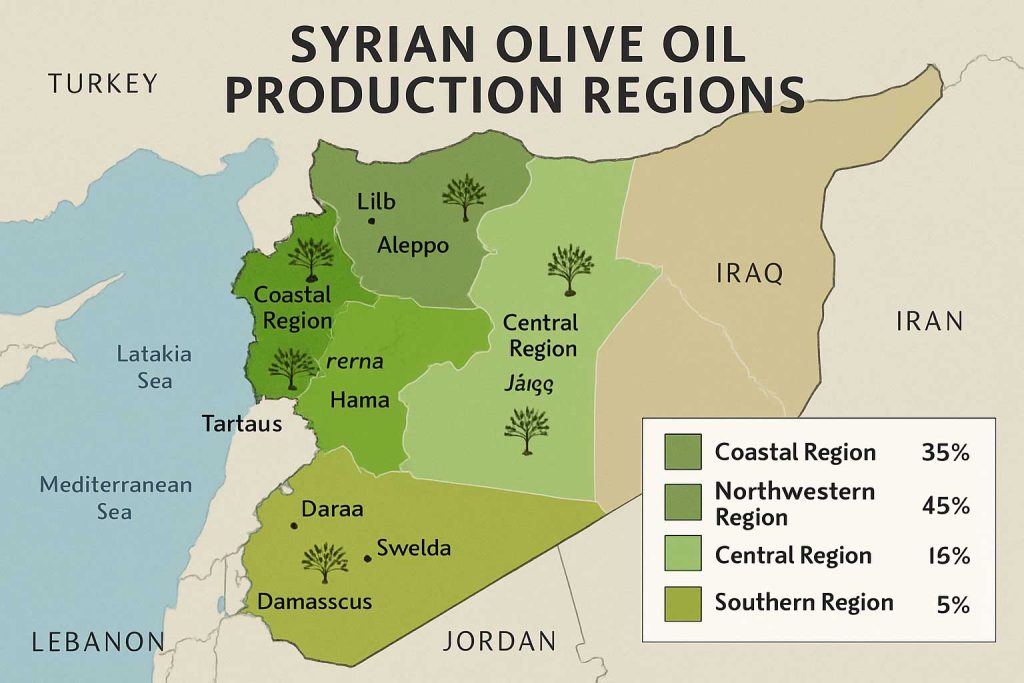
Syria is distinguished by its strategic geographical location in the heart of the Mediterranean region, providing ideal climatic conditions for olive cultivation. Olive cultivation areas extend across five main agroclimatic zones, each characterized by unique features that affect the quality and flavor of produced olive oil [17].
Main Olive Oil Production Regions:
1. Coastal Region (Latakia and Tartous)
The coastal region is one of the most important olive oil production areas in Syria, containing about 35% of the country's total olive trees [18]. This region is characterized by:
- Climate: Moderate with annual rainfall ranging between 800-1200 mm
- Soil: Clay-rich in organic matter and minerals
- Elevation: From sea level to 800 meters
- Oil Characteristics: Moderate flavor with natural sweetness and mild bitterness
This region produces high-quality olive oil characterized by its light golden color and balanced flavor, making it suitable for a variety of uses in European cuisine.
2. Northwestern Region (Idlib and Aleppo)
This region contains the largest concentration of olive trees in Syria, with about 45% of total trees [19]. It is characterized by:
- Climate: Semi-arid with rainfall ranging between 400-700 mm annually
- Soil: Calcareous well-drained with medium organic content
- Elevation: 200-600 meters above sea level
- Oil Characteristics: Strong flavor with clear bitterness and distinctive pungency
Olive oil from this region has a high content of antioxidants and polyphenols, making it ideal for medicinal and cosmetic uses, as well as for food.
3. Central region (Homs and Hama)
This region contributes about 15% of Syrian olive oil production [20]. It is characterized by:
- Climate: Continental with hot summers and cold winters
- Soil: Varied from clay to sandy
- Elevation: 300-800 meters above sea level
- Oil Characteristics: Medium flavor with a good balance of sweetness and bitterness.
4. Southern region (Daraa and Sweida)
It represents about 5% of Syrian olive oil production, and is characterized by:
- Climate: Semi-arid with limited rainfall
- Soil: Mineral-rich basalt
- Elevation: 400-1200 meters above sea level
- Oil Characteristics: Concentrated flavor with unique characteristics resulting from the basalt soil.
Main Syrian Olive Varieties
1. Syrian Variety (Souri)
The Syrian Variety (Souri) is the most widespread in Syria, constituting about 60% of total olive trees [21]. This variety is characterized by:
Agricultural Characteristics:
- High adaptability to semi-arid conditions
- Good resistance to drought and frost
- High and regular productivity
- Medium to late ripening (October-November)
Oil Characteristics:
- Fruity flavor with mild bitterness
- Fragrant aroma with herbal notes
- Golden green color
- Good stability and oxidation resistance
2. Dan Variety
It accounts for about 20% of Syrian olive trees and is characterized by:
Agricultural Characteristics:
- Good adaptation to coastal areas
- High and early productivity
- Early ripening (September-October)
- Medium sensitivity to diseases
Oil Characteristics:
- Sweet flavor with very slight bitterness
- Soft fruity aroma
- Light golden color
- Suitable for sensitive uses
3. Zaity Variety
Represents about 15% of trees, characterized by:
Agricultural Characteristics:
- High drought resistance
- Medium but regular productivity
- Late ripening (November-December)
- Excellent adaptation to interior regions
Oil Characteristics:
- Strong flavor with clear bitterness
- High antioxidant content
- Dark green color
- Ideal for medicinal uses
Cultivation and Harvesting Techniques
Traditional Agricultural Practices:
Olive cultivation in Syria relies on a mix of traditional and modern techniques, focusing on sustainability and quality:
- Rain-fed Agriculture: 90% of trees depend on rainwater.
- Traditional Pruning: Done annually to maintain tree health and increase productivity.
- Natural Cultivation: Avoiding deep plowing to preserve tree roots.
- Biological Control: Using natural enemies to control pests.
Harvesting techniques:
- Manual Harvesting: For fruits destined for extra virgin olive oil production
- Net Use: To protect fruits from falling and damage.
- Optimal Timing: Harvesting fruits at optimal ripeness stage.
- Quick Transport: To oil mills within 24 hours of harvest.
Challenges and Opportunities in Production Regions
Challenges:
- Climate Change: Impact on rainfall amounts and temperatures
- Pests and Diseases: Especially olive fly and peacock spot
- Water Shortages: In some interior regions
- Need for Modernization: In cultivation and processing techniques
Opportunities:
- Expansion in Organic Farming: To meet growing global demand
- Improvement of Irrigation Techniques: To increase productivity in dry areas
- Development of New Varieties: Drought-resistant and high-productivity
- Investment in Modern Technologies: To improve oil quality and production efficiency
This diversity in production regions and varieties makes Syria capable of meeting diverse needs of the European market, from mild olive oil for sensitive uses to strong oil for medical and cosmetic uses.
Certifications and Compliance
Organic Certification System in Syria
The organic agriculture sector in Syria is witnessing continuous development, with increasing numbers of farmers and producers seeking internationally recognized organic certifications. This trend comes in response to growing demand for organic products in global markets, especially the European market [22].
Accredited Organic Certification Bodies:
Several accredited bodies operate in Syria to issue organic production certificates, recognized by the European Union:
- ECOCERT: French accredited body operating in Syria since 2010
- BCS ÖKO-GARANTIE: German body specialized in organic certifications
- CERES: German accredited body for organic products and fair trade
- IMO (Institute for Marketecology): Swiss internationally accredited body
Requirements for Obtaining Organic Certification:
To obtain organic production certification for olive oil, producers must comply with the following standards:
In Cultivation Stage:
- No use of synthetic chemical pesticides for at least 3 years
- Use only certified organic fertilizers
- Apply integrated pest management system using biological methods
- Preserve biodiversity in the farm
- Document all agricultural operations and inputs used
In Processing Stage:
- Use only mechanical methods for oil extraction
- Avoid using chemicals in extraction process
- Maintain low temperature during pressing (below 27°C)
- Separate organic from non-organic products in all processing stages
- Apply comprehensive traceability system from farm to consumer
Quality Certifications Required for Export
1. Certificate of Analysis
This certificate includes results of physical and chemical analyses of the oil, including:
| Standard | Approved Method | Required Limit |
|---|---|---|
| Free Acidity | IOC/T.20/Doc. No 34 | ≤ 0.8% |
| Peroxide Number | IOC/T.20/Doc. No 35 | ≤ 20 meq O2/kg |
| K232 | IOC/T.20/Doc. No 19 | ≤ 2.5 |
| K270 | IOC/T.20/Doc. No 19 | ≤ 0.22 |
| Polyphenols | IOC/T.20/Doc. No 29 | > 150 mg/kg |
| Moisture | IOC/T.20/Doc. No 24 | ≤ 0.2% |
2. Sensory Evaluation Certificate
Issued by accredited tasting panels according to International Olive Council standards, including:
- Assessment of positive characteristics (fruitiness, bitterness, pungency)
- Determining the presence or absence of sensory defects
- Oil classification according to appropriate category
3. Certificate of Origin
Issued by Syrian Chamber of Commerce confirming:
- Product source and place of production
- Product and exporter identity
- Product compliance with local specifications
4. Phytosanitary Certificate
Issued by Syrian Ministry of Agriculture confirming:
- Product freedom from plant pests and diseases
- Product compliance with phytosanitary requirements of importing country
- Product safety for human consumption
Quality Assurance and Traceability System
HACCP System (Hazard Analysis and Critical Control Points):
Syrian organic olive oil producers apply HACCP system to ensure product safety, including:
Identifying Potential Hazards:
- Microbiological contamination
- Chemical contamination (pesticide residues)
- Physical contamination (impurities)
- Oxidation and rancidity
Critical Control Points:
- Fruit quality at harvest
- Pressing temperature
- Storage conditions
- Equipment and tool cleanliness
Corrective Actions:
- Clear protocols for dealing with deviations
- Cleaning and sterilization procedures
- Documentation and record system
Traceability System:
The traceability system applied in Syrian organic olive oil production includes:
- Batch Number: Links each package to its source and production stages
- Farm Records: Include cultivation and harvest details
- Mill Records: Include pressing dates and processing conditions
- Storage Records: Include storage conditions and duration
- Packaging Records: Include packaging dates and package information
Additional and Specialized Certifications
1. Fair Trade Certification
Aims to ensure farmers receive fair prices and appropriate working conditions:
- Guaranteed minimum prices for producers
- Fair trade premium for development projects
- Labor and environmental standards
- Sustainable community development
2. Carbon Neutral Certification
Confirms producer commitment to reducing carbon footprint:
- Measuring carbon emissions in all production stages
- Implementing emission reduction measures
- Offsetting remaining emissions
- Independent verification of data
3. Halal Certification
Important for markets with Muslim consumers:
- Product compliance with Islamic law
- No use of prohibited materials in production
- Cleanliness and purity of facilities and equipment
- Supply chain verification
Challenges in Obtaining Certifications
Technical Challenges:
- Cost of obtaining certifications and annual renewal
- Need to train workers on required standards
- Developing documentation and record systems
- Investment in improving facilities and equipment
Administrative Challenges:
- Complexity of procedures and requirements
- Coordination between different bodies
- Ensuring continuous compliance with standards
- Managing inspection and review processes
Available Solutions and Support:
- Training Programs: Provided by accredited bodies and international organizations
- Technical Support: Through specialized consultants
- Financing: Support programs for obtaining certifications
- Group Cooperation: Forming producer groups to reduce costs
Importance of Certifications in European Market
Certifications play a crucial role in Syrian olive oil success in the European market:
Building Trust: Certifications confirm to consumers and importers product quality and authenticity
Market Access: Many European markets require specific certifications
Added Value: Certified products receive higher prices
Competitiveness: Distinguish product from non-certified competitors
Sustainability: Ensure continued market access in the long term
New Opportunities After Sanctions Relief
Political and Economic Changes in 2025
The year 2025 witnessed a fundamental transformation in international relations with Syria, with the lifting of most economic sanctions imposed on the country. These developments opened new horizons for Syrian trade with global markets, especially European markets [23].
Key Developments:
- May 23, 2025: The US Treasury Department announced lifting most economic sanctions on Syria, while maintaining some restrictions on dual-use exports [24].
- May 27, 2025: The European Union Council adopted a set of legal decisions to lift all economic sanctions on Syria, with limited exceptions [25].
- March 2025: The United Kingdom began lifting sanctions on major Syrian companies, followed by comprehensive measures in April 2025 [26].
These changes led to:
- Reopening international banking channels with Syria
- Lifting restrictions on financial transfers
- Facilitating import and export operations
- Access to global markets
- Improved foreign investment opportunities in the agricultural sector
Impact of Sanctions Relief on Olive Oil Sector
Sanctions relief led to significant positive changes in the Syrian olive oil sector:
1. Improved Supply Chains and Export
- Direct maritime transport: Possibility of direct shipping to European ports
- Integrated logistics services: Availability of international insurance and shipping services
- Cost reduction: Decrease in transport and insurance costs by up to 40% [27]
- Reduced delivery time: From 45-60 days to only 15-20 days
2. Facilitated Financial Transactions
- Opening documentary credits: Possibility of dealing with European banks
- Direct financial transfers: Without need for intermediaries
- Commercial insurance services: Providing transaction guarantees
- Trade financing: Possibility of obtaining export financing
3. Access to Modern Technology
- Advanced Pressing Equipment: Improving production quality and efficiency
- Modern Packaging Systems: Developing packages meeting European standards
- Advanced Analysis Techniques: Ensuring product quality and compliance with standards
- Electronic Tracking Systems: Enhancing transparency and consumer trust
New Market Opportunities for European Importers
Lifting sanctions on Syria provides exceptional opportunities for European importers, most importantly:
1. Competitive Price Advantage
- Reduced Production Costs: Labor and land at lower cost than competitors
- Reduced Intermediary Costs: Possibility of direct dealing with producers
- Volume Savings: Possibility of importing large quantities at preferential prices
- Better Profit Margins: Improving importer competitiveness in local market
According to a recent study, European importers can achieve savings of up to 20-30% compared to olive oil from other sources while maintaining the same quality level [28].
2. Diversifying Supply Sources
- Risk Reduction: Not depending on limited sources
- Supply Stability: Compensating for shortages in weak seasons
- Product Diversity: Unique varieties not available from other sources
- Greater Flexibility: In negotiating terms and quantities
3. Meeting Growing Demand for Organic Products
- Organic Product Market Growth: At 8-10% annually in Europe [29]
- Consumer Readiness: To pay 20-25% premium for organic products
- Trend Toward Sustainability: Increasing environmental awareness among consumers
- Retail Requirements: Large retail chains demand organic products
4. Cooperation and Joint Investment Opportunities
- Investment in Mills: Upgrading facilities and improving quality
- Contract Farming: Ensuring supplies and quality
- Joint Brands: Developing special products for European market
- Knowledge and Technology Transfer: Improving agricultural and manufacturing practices
Market Entry Strategies
To benefit from new opportunities, European importers can follow these strategies:
1. Direct Import from Producers
Advantages:
- Better prices without intermediaries
- Direct quality control
- Building long-term relationships
- Possibility of product customization
Practical Steps:
- Visit specialized trade fairs
- Contact Syrian chambers of commerce
- Use "AlTojjar" platform to connect with producers
- Conduct field visits to farms and mills
2. Working with Specialized Distributors
Advantages:
- Experience in dealing with Syrian market
- Aggregating products from multiple sources
- Integrated logistics services
- Reducing operational risks
Practical Steps:
- Identify distributors with good reputation
- Verify certifications and licenses
- Request samples and test quality
- Negotiate clear contractual terms
3. Joint Investment in Production
Advantages:
- Control over all production stages
- Ensuring compliance with required standards
- Securing long-term supplies
- Possibility of developing exclusive products
Practical Steps:
- Study available investment opportunities
- Learn about local laws and regulations
- Build partnerships with local producers
- Develop long-term investment plan
Remaining Challenges and Proposed Solutions
Despite lifting sanctions, some challenges still need consideration:
1. Infrastructure Challenges
Challenges:
- Weak internal transport networks
- Limited refrigerated storage facilities
- Aging of some olive mills
Solutions:
- Investment in modern storage facilities
- Contracting with specialized logistics companies
- Updating entire supply chain
2. Quality and Standards Challenges
Challenges:
- Quality level variations between producers
- Limited internationally accredited laboratories
- Need to update some practices
Solutions:
- Training and qualification programs for producers
- Investment in accredited laboratories
- Implementing comprehensive quality management systems
3. Financing and Payment Challenges
Challenges:
- Slow rehabilitation of banking system
- Limited commercial financing options
- Exchange rate fluctuation risks
Solutions:
- Using banks in third countries
- Guaranteed payment mechanisms
- Insurance against exchange risks
Success Stories and Real Experiences
Case Study 1: German Import Company
"Organic Harvest" German company managed to sign an agreement with an agricultural cooperative in the Syrian coastal region to import 200 tons of organic olive oil annually. Partnership results:
- 35% increase in company sales
- 22% improvement in profit margins
- Expanding customer base to include 5 new European countries
Case Study 2: French Retail Chain
"Natur Plus" French chain developed a private label for Syrian organic olive oil, focusing on the human story behind the product. Results:
- Positive consumer response
- Increased awareness of Syrian product quality
- Building sustainable relationship with producers
These stories confirm the great potential of Syrian organic olive oil in the European market, and show how importers can benefit from new opportunities provided by sanctions lifting.
European Buyer's Guide
Import Steps for European Buyers
Importing Syrian organic olive oil to the European Union requires following specific steps to ensure compliance with required regulations and standards. The following is a comprehensive guide for European importers:
1. Research and Supplier Identification
Practical Steps:
- Define your needs: Oil type, quantity, required quality, budget
- Search for suppliers: Through trading platforms, exhibitions, chambers of commerce
- Contact AlTojjar platform: To obtain a list of certified exporters
- Request samples: To ensure product quality before contracting
- Verify certifications: Ensure supplier has required certifications
Best Practices:
- Request references from previous customers
- Verify supplier's production capacity
- Assess supply stability throughout the year
- Study supplier's history in commitment to deadlines and quality
2. Negotiation and Contracting
Main Contract Terms:
- Specifications: Precise definition of product specifications and required quality
- Quantities and prices: Determining quantities, delivery schedule, and prices
- Payment terms: Payment method, guarantees, timeline
- Delivery terms: Incoterms (CIF, FOB, EXW), delivery point
- Guarantees: Quality guarantee, complaint procedures, compensations
- Force Majeure: Define exceptional circumstances and handling mechanism
Tips for Successful Negotiation:
- Start with small orders to test commitment and quality
- Include clear terms for arbitration and dispute resolution
- Agree on quality inspection procedures before shipping
- Document all agreements and modifications in writing
3. Import and Customs Clearance Procedures
Required Documents:
- Commercial invoice: Including product details, quantity, and value
- Bill of lading: Specifying transport details and destination
- Certificate of Origin: Certified by Chamber of Commerce in Syria
- Organic Production Certificate: From EU-accredited body
- Analysis certificate: Confirming product compliance with required standards
- Import Declaration: Submitted to customs authorities in importing country
Customs Clearance Steps:
- Submit Customs Declaration: Through TARIC electronic system
- Pay Duties and Taxes: Customs duties and value-added tax
- Inspection and Examination: Goods may be subject to random inspection
- Issue Release Permit: After fulfilling all requirements
- Transport Goods to Warehouse: According to local storage regulations
Tips for Speeding Clearance Process:
- Use specialized customs agent
- Ensure completeness and accuracy of all documents
- Comply with packaging and wrapping requirements
- Pre-register in electronic import systems
4. Quality Inspection and Verification
Quality Inspection Procedures:
- Visual Inspection: Ensure package integrity and no leakage
- Sensory Inspection: Evaluate color, aroma, and taste
- Laboratory Analysis: Ensure product compliance with agreed specifications
- Label Inspection: Verify correctness and completeness of package data
Sampling Protocol:
- Take random samples from different parts of shipment
- Use approved sampling methods according to international standards
- Document sampling process with photos and reports
- Keep reference samples for future reference when needed
5. Storage and Distribution
Ideal Storage Conditions:
- Temperature: 14-18°C
- Humidity: Less than 65%
- Lighting: Avoid direct light exposure
- Ventilation: Good to prevent foreign odors
- Cleanliness: Clean environment free from strong odors
Best Distribution Practices:
- Apply FIFO system (First In, First Out)
- Monitor transport and storage conditions in all supply chain stages
- Use appropriate transport means that maintain product quality
- Train sales team on product characteristics and competitive advantages
Marketing and Promotion Strategies
1. Competitive Differentiation
Key Differentiation Points for Syrian Organic Olive Oil:
- Authenticity and heritage: Focus on ancient history of olive cultivation in Syria
- Unique characteristics: Highlighting distinctive flavor and unique sensory characteristics
- High nutritional value: Focus on high antioxidant content
- Sustainability: Highlighting sustainable and environmentally friendly agricultural practices
- Human story: Focus on supporting farmers and local communities
Differentiation Strategies:
- Develop strong brand reflecting product identity
- Design distinctive packages attracting consumer attention
- Create marketing content telling product story
- Participate in international quality competitions
2. Appropriate Marketing Channels
Retail Sales Channels:
- Specialized organic product stores: Targeting health and sustainability-conscious consumers
- Premium supermarket chains: Targeting high-income consumer segment
- Mediterranean food stores: Targeting Mediterranean cuisine enthusiasts
- Fair trade stores: Targeting socially conscious consumers
Direct Sales Channels:
- Online Stores: Provide direct access to consumers
- Periodic Subscriptions: Provide stable income and continuous customer relationship
- Farmers Markets: Allow direct interaction with consumers
- Food Exhibitions: Opportunity to introduce product and build new business relationships
3. Pricing Strategies
Price Determination Factors:
- Production and Import Costs: Include purchase, shipping, customs, storage costs
- Competitor Prices: Analyze prices of similar products in market
- Perceived Value: Assess consumer willingness to pay premium for organic product
- Brand Strategy: Determine product position in market (luxury, medium, economy)
Recommended Pricing Strategies:
- Premium Pricing: Set price slightly higher than competitors while highlighting added value
- Volume Offers: Provide discounts for large quantity purchases
- Seasonal Pricing: Adjust prices according to seasonal supply and demand
- Product Bundles: Offer product within bundles with other Mediterranean products
4. Promotion and Communication
Effective Promotion Tools:
- Educational Content: Articles, videos, recipes highlighting product benefits and uses
- Social Media: Build community of people interested in organic and healthy products
- Influencer Collaboration: Nutrition experts, famous chefs, specialized bloggers
- Event Participation: Food exhibitions, food festivals, workshops
Main Communication Messages:
- Focus on exceptional quality and unique characteristics
- Highlight health benefits supported by scientific research
- Emphasize sustainability and social responsibility
- Highlight certifications and awards
Practical Experiences and Success Stories
Case Study: Specialized Store in Berlin
"Oliva Natura" store specializing in organic products in Berlin managed to increase its sales by 45% after introducing Syrian organic olive oil to its product range. Key success factors:
- Organizing weekly tasting sessions for customers
- Providing detailed information about product source and production methods
- Offering innovative recipes using olive oil
- Collaborating with local restaurants to use product in their dishes
Case Study: Dutch Importer
"Green Harvest" Dutch company succeeded in building sustainable relationship with Syrian agricultural cooperative, leading to:
- Providing high-quality product at competitive price
- Ensuring supply stability throughout the year
- Developing customized products for Dutch market
- Contributing to local community development in Syria
Frequently Asked Questions for Importers
Competitive Analysis
Comparison of Syrian Olive Oil with Main Competitors
Syrian organic olive oil faces strong competition in the European market from established producers, but it enjoys unique competitive advantages that distinguish it from competitors:
1. Comparison with Spanish Olive Oil
Spanish Product Strengths:
- Large market share and wide brand recognition
- Advanced and established distribution network
- Great diversity in products and prices
- Massive investments in marketing and promotion
Syrian Product Strengths:
- Unique and distinctive flavor due to special climatic conditions and soil
- More competitive prices (15-25% lower than comparable Spanish products) [30]
- Higher content of antioxidants and polyphenols
- Touching human story that attracts socially responsible consumers
Opportunities for Syrian Product:
- Target consumer segment seeking unique and authentic products
- Focus on specialized sectors like premium restaurants
- Benefit from growing trend toward supporting small producers
2. Comparison with Italian Olive Oil
Italian Product Strengths:
- Excellent global reputation in quality and authenticity
- Great regional diversity with distinctive characteristics for each region
- Ancient traditions in premium olive oil production
- Strong "Made in Italy" brand power
Syrian Product Strengths:
- Longer history in olive cultivation (6000 years vs 3000 years)
- Unique sensory characteristics due to genetic diversity of local varieties
- Higher proportion of beneficial fatty acids
- Significantly lower price (30-40% lower than premium Italian products) [31]
Opportunities for Syrian Product:
- Target consumers seeking alternatives to expensive Italian products
- Focus on distinctive health and nutritional characteristics
- Develop specialized products for medical and cosmetic uses
3. Comparison with Greek Olive Oil
Greek Product Strengths:
- Ancient traditions and wide product knowledge
- High quality and strict production standards
- Diversity in varieties and flavors
- Strong government support for exports
Syrian Product Strengths:
- Greater climatic diversity leading to oil characteristic diversity
- Unique local varieties not found in other regions
- Lower production costs allowing competitive prices
- Great growth potential with improving conditions
Opportunities for Syrian Product:
- Benefit from growing demand for "newly discovered" products
- Develop partnerships with importers seeking new sources
- Focus on specialized markets and premium stores
4. Comparison with Tunisian and Moroccan Olive Oil
Maghreb Product Strengths:
- Geographic proximity to European markets
- Lower transport costs
- Established trade relations with Europe
- Support from Euro-Mediterranean cooperation programs
Syrian Product Strengths:
- Higher quality due to ideal climatic conditions
- Greater diversity in varieties and characteristics
- Longer experience in traditional production techniques
- Greater production potential in the long term
SWOT Analysis for Syrian Organic Olive Oil
Strengths
- Exceptional Quality:
- High content of antioxidants and polyphenols
- Unique and balanced flavor
- Distinguished physical and chemical characteristics
- Competitive Cost:
- Relatively low production costs
- Competitive prices compared to European competitors
- Possibility of achieving good profit margins for importers
- Authenticity and heritage:
- Ancient history in olive cultivation
- Unique local varieties
- Traditional production techniques preserving quality
- Environmental Sustainability:
- Heavy reliance on rain-fed agriculture
- Environmentally friendly agricultural practices
- Preserved biodiversity
Weaknesses
- Limited Brand Awareness:
- Limited knowledge of Syrian product in European markets
- Absence of advanced marketing strategies
- Strong competition from established brands
- Infrastructure Challenges:
- Limited modern storage and processing facilities
- Supply chain and logistics challenges
- Need to update some mills
- Production Fluctuations:
- Heavy dependence on climatic conditions
- Variation in quantities produced between seasons
- Challenges in ensuring supply stability
Opportunities
- Sanctions Lifting:
- Opening new export markets
- Facilitating financial and commercial transactions
- Possibility of investing in sector development
- Growing Demand for Organic Products:
- Increasing health awareness among consumers
- Willingness to pay premium for organic products
- Growth of specialized retail sector
- Geographic Diversification:
- Entering new markets in Eastern Europe
- Targeting specialized and premium markets
- Developing innovative distribution channels
- Strategic Partnerships:
- Possibility of cooperation with European importers
- Developing joint products
- Technology and expertise transfer
Threats
- Intense Competition:
- European producer dominance in market
- Price wars with other producers
- Difficulty breaking entry barrier to established markets
- Regulatory Challenges:
- Complexity of import requirements and certifications
- Potential changes in regulations and standards
- Costs of compliance with European standards
- Political and Economic Risks:
- Regional instability
- Exchange rate fluctuations
- Risks of trade policy changes
Recommended Competitive Strategies
1. Quality Differentiation Strategy
- Focus on Unique Characteristics: Highlighting distinctive flavor and unique sensory characteristics
- Quality Investment: Improve production and processing operations
- Obtain Distinguished Certifications: International quality certificates and awards
- Continuous Development: Improve product based on customer feedback
2. Competitive Pricing Strategy
- Set Competitive Prices: Benefit from low production costs
- Volume Offers: Provide discounts for large purchases
- Pricing Flexibility: Adapt prices according to market and season
- Cost Transparency: Clarify price components to importers
3. Brand Building Strategy
- Develop Strong Identity: Create brand reflecting authenticity and quality
- Human story: Focus on farmer and local community stories
- Digital Marketing: Use social media and digital content
- Strategic Partnerships: Collaborate with famous chefs and influencers
4. Specialized Distribution Strategy
- Target Specialized Sectors: Premium restaurants, organic food stores
- Innovative Distribution Channels: Direct sales, subscriptions, e-commerce
- Distinguished Customer Service: Technical and marketing support for distributors
- Supply Flexibility: Meet different customer needs
Conclusions and Recommendations
Executive Summary
Syrian organic olive oil represents an exceptional opportunity for European importers in light of the positive developments witnessed in 2025, especially the lifting of American and European sanctions on Syria. This unique product combines ancient heritage with exceptional quality and competitive prices, making it an ideal choice for importers seeking high-quality products that meet the growing demand for organic products in the European market.
Syria is distinguished by ideal climatic conditions, rich soil, and ancient agricultural traditions spanning thousands of years, producing olive oil with unique characteristics that surpass many competitors in the market. With more than 90 million olive trees distributed over an area exceeding 650,000 hectares, Syria has significant production potential that enables it to meet the growing demand in European markets.
Key Recommendations for European Importers
1. Strategic Recommendations
Start with small trial orders:
- Test product quality and local market acceptance
- Evaluate supplier reliability and commitment to deadlines and quality
- Study customer and consumer reactions
- Identify best varieties and products for target market
Build long-term relationships with suppliers:
- Contract with reliable and certified producers
- Develop strategic partnerships ensuring supply stability
- Invest in developing supplier capabilities
- Exchange knowledge and expertise to improve quality
Focus on Differentiation and Added Value:
- Develop customized products for local market
- Create strong brands reflecting product quality and authenticity
- Invest in distinctive packaging and wrapping
- Develop impactful marketing story about product
2. Operational Recommendations
Ensure compliance with European standards:
- Verify suppliers have all required certifications
- Conduct periodic analyses to ensure product quality
- Apply comprehensive tracking systems from farm to consumer
- Invest in advanced quality management systems
Develop effective distribution network:
- Target appropriate channels for product nature
- Build strong relationships with specialized retailers
- Develop direct and innovative sales channels
- Provide marketing and technical support to distributors
Manage Risks Effectively:
- Diversify supply sources to reduce risks
- Obtain comprehensive insurance for goods and transactions
- Develop emergency plans to deal with potential challenges
- Monitor political and economic developments in the region
3. Marketing Recommendations
Target Appropriate Sectors:
- Focus on organic and healthy product stores
- Target premium restaurants specialized in Mediterranean cuisine
- Develop direct sales channels to consumers
- Participate in specialized exhibitions and events
Develop Integrated Marketing Strategy:
- Create educational content about product benefits and uses
- Use social media effectively
- Collaborate with influencers and nutrition experts
- Organize tasting events and customer workshops
Future Opportunities
1. European Organic Products Market Growth
With continued growth in demand for organic products in Europe at 8-10% annually, the European olive oil market is expected to reach $15.7 billion by 2032 [32]. This growth provides significant opportunities for Syrian organic olive oil to gain a growing share of this market.
2. Expansion into New Markets
After sanctions relief, Syrian olive oil has opportunities to enter new markets in Eastern and Northern Europe, where demand for organic and healthy products is increasing. These markets are characterized by less competition and rapid demand growth.
3. Product Innovation
Innovative products can be developed from Syrian olive oil, such as:
- Oils flavored with natural herbs
- Cosmetic and medical products
- Dietary supplements rich in antioxidants
- Products specialized for specialized culinary uses
Practical Steps to Get Started
For New Importers:
- Research and Initial Assessment (First Month):
- Study local market and identify opportunities
- Search for potential suppliers
- Request samples and conduct initial evaluation
- Detailed Assessment and Negotiation (Second Month):
- Visit potential suppliers in Syria
- Negotiate terms and prices
- Verify certifications and licenses
- Trial Order (Third Month):
- Execute small trial order
- Test import and clearance processes
- Evaluate product quality and customer reactions
- Gradual Expansion (Months 4-6):
- Gradually increase order volumes
- Develop distribution network
- Build brand and marketing
For Current Importers:
- Opportunity Assessment (Two Weeks):
- Compare Syrian olive oil with current suppliers
- Analyze economic feasibility
- Evaluate impact on current operations
- Testing and Evaluation (One Month):
- Request samples and conduct detailed comparisons
- Test market acceptance of new product
- Evaluate possibility of integration with current products
- Gradual Implementation (3-6 Months):
- Introduce Syrian product as additional option
- Monitor performance and sales
- Adjust strategy according to results
Conclusion
Syrian organic olive oil represents a golden opportunity for European importers seeking to diversify supply sources and access high-quality products at competitive prices. With sanctions relief and improved political and economic conditions, opportunities are increasing to benefit from this "liquid gold" that combines ancient heritage with exceptional quality.
Success in this field requires deep understanding of the market and product, building strong relationships with reliable suppliers, and commitment to the highest quality standards and compliance with European regulations. With proper planning and thoughtful execution, European importers can achieve great success in importing and marketing Syrian organic olive oil.
About AlTojjar Platform:
AlTojjar is the leading B2B e-commerce platform connecting Syrian exporters with global markets. The platform provides comprehensive services including digital marketing, logistics support, trade finance solutions, and specialized trade consulting.
For more information or to connect with Syrian organic olive oil exporters, please visit our website or contact us directly.
Disclaimer: All information contained in this guide is based on the latest available data at the time of publication. It is recommended to verify current regulatory and legal information before making business decisions.
References
[1] US Department of Treasury, “Syria Sanctions Relief”, May 23, 2025
[2] International Olive Council, “Syria Country Profile”, 2024
[3] Persistence Market Research, “Europe Olive Oil Market Analysis”, 2025
[4] Archaeological Studies on Mediterranean Agriculture, University of Damascus, 2023
[5] Syrian Ministry of Agriculture, “Olive Sector Statistics”, 2024
[6] Olive Oil Times, “Syria Production Outlook”, September 2024
[7] FAO, “Syrian Agricultural Potential Assessment”, 2024
[8] ACSAD, “Syrian Organic Olive Oil Export Potential”, 2024
[9] Journal of Food Composition and Analysis, “Syrian Olive Oil Characteristics”, 2024
[10] International Journal of Food Science, “Antioxidant Content in Syrian Olive Oil”, 2023
[11] IOC Standards and Methods, “Quality Parameters for Extra Virgin Olive Oil”, 2024
[12] European Journal of Nutrition, “Health Benefits of Extra Virgin Olive Oil”, 2024
[13] Nature Communications, “Anti-inflammatory Properties of Oleocanthal”, 2023
[14] Food Chemistry, “Polyphenols in Mediterranean Olive Oils”, 2024
[15] EU Regulation 2019/1604 on Olive Oil Classification
[16] EU Regulation 2018/848 on Organic Production
[17] Syrian Agricultural Research Center, “Agroclimatic Zones Study”, 2023
[18] Coastal Agricultural Directorate, “Olive Production Statistics”, 2024
[19] Aleppo Agricultural Directorate, “Regional Production Data”, 2024
[20] Central Syria Agricultural Survey, 2024
[21] Damascus University, “Syrian Olive Cultivars Study”, 2023
[22] ECOCERT Syria, “Organic Certification Report”, 2024
[23] Council of the European Union, “Syria Sanctions Lifting”, May 27, 2025
[24] US Treasury OFAC, “Syria General License 25”, May 23, 2025
[25] EU Council Decision on Syria Sanctions Relief, May 2025
[26] UK Treasury, “Syria Sanctions Update”, April 2025
[27] Mediterranean Shipping Council, “Syria Trade Route Analysis”, 2025
[28] European Import Association, “Syrian Products Cost Analysis”, 2025
[29] Organic Trade Association Europe, “Market Growth Report”, 2025
[30] Market Research International, “Olive Oil Price Comparison Study”, 2025
[31] Premium Food Import Analysis, “Mediterranean Olive Oil Pricing”, 2025
[32] Fortune Business Insights, “Europe Olive Oil Market Forecast”, 2025


 English
  العربية